

Skip to content
shutterstock_1369839569

Potato Starch: Functionality, Applications, and Benefits in Food Production


Discover what potato starch is and how it can enhance texture and efficiency in modern food production across multiple applications.

INSIGHTS

Potato starch: what it is and why it matters in food production

In short: Potato starch is a highly functional, plant-based ingredient that can be used to improve texture, stability, and cost-efficiency in food.

As food manufacturers face increasing pressure to optimise costs, improve product performance, and reduce environmental impact, potato starch has become a key ingredient across a wide range of applications.

What is potato starch?

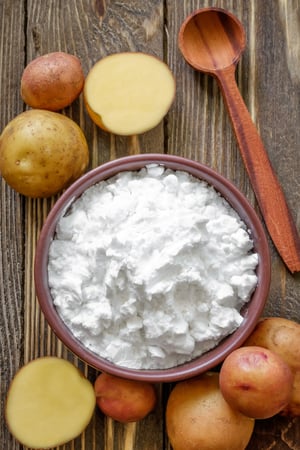
Potato starch is a refined carbohydrate extracted from potatoes. It consists primarily of two polysaccharides: amylose and amylopectin, which define its functional behaviour in food systems.

What sets potato starch apart is its unique combination of properties:

Neutral taste and colour, making it suitable for a wide range of formulations
High water-binding capacity, enabling effective moisture control
Strong viscosity development, even at relatively low concentrations
Clean label potential, depending on processing and modification level

These characteristics make potato starch a versatile ingredient for both traditional and plant-based food applications.

INSIGHTS

Why is potato starch widely used in food production?

Potato starch is widely used because it delivers value across three critical dimensions: functional performance, cost-efficiency, and process reliability. This combination makes it a strategic ingredient for manufacturers aiming to optimise both product quality and production economics.

Functional performance

From a functionality perspective, potato starch plays a central role in defining texture and stability in food products. It enables manufacturers to control viscosity and achieve the desired thickness in liquid and semi-solid systems, while also contributing to gelling and structure formation in more complex applications.

In addition, potato starch can enhance mouthfeel by creating a smooth and creamy texture, which is essential in many formulations. It can also contribute to elasticity and stretch in structured products, as well as crispiness in coatings and fried applications. This level of control allows product developers to fine-tune product characteristics and ensure consistent quality across production batches.
shutterstock_155244494
Cost optimisation

Potato starch also provides significant cost advantages in many formulations. It allows manufacturers to reduce reliance on more expensive ingredients, such as dairy or protein components, by partially replacing or extending them without compromising functionality.

Its strong water-binding capacity contributes to improved yield, as more water can be retained within the product matrix. This enables more efficient use of raw materials and supports recipe optimisation. As a result, manufacturers can achieve a more stable total cost of ownership while reducing exposure to price volatility in global ingredient markets.

Process reliability

In addition to functionality and cost benefits, potato starch supports robust and reliable processing. Depending on whether native or modified starch is used, it can be tailored to withstand demanding industrial conditions.

This includes maintaining stability during high-temperature processing, tolerating mechanical shear during mixing, and performing consistently under freezing and thawing conditions. Such resilience reduces batch-to-batch variation and supports scalable, efficient manufacturing processes.

Overall, this combination of performance and reliability makes potato starch a dependable ingredient in modern food production.


INSIGHTS

How is potato starch used in food applications?

Potato starch is widely used across multiple food categories, where its functionality supports both product quality and process efficiency.

Examples of applications are:

Cheese alternatives

In cheese alternatives, potato starch contributes to:

Melt and stretch behaviour
Sliceability and firmness
Creamy, consistent texture

This is particularly important in plant-based formulations, where replicating the functionality of casein remains a key challenge.


Confectionery

In confectionery, potato starch supports:

Gel formation and structure
Chewiness and elasticity
Process stability during moulding and setting

Its neutral taste ensures it does not interfere with flavour profiles.

Bakery & snacks

In bakery and snack applications, potato starch can improve:

Crispiness and texture in fried or baked products
Moisture control for extended shelf life
Dough handling properties

This contributes to both product quality and manufacturing efficiency.

Unlocking the full potential of potato starch

Potato starch is more than a functional ingredient—it is a strategic tool for improving product quality, optimising costs, and advancing sustainability goals.

By selecting the right type of starch and working closely with an experienced partner, food manufacturers can unlock new opportunities across applications and markets.

Contact us to learn how KMC’s potato-based solutions can support your production goals.

Want to know more about how we can help you?